Sea & Community
Fixed-Net Fishing
The people behind the morning catch.
A Net That Holds a Community
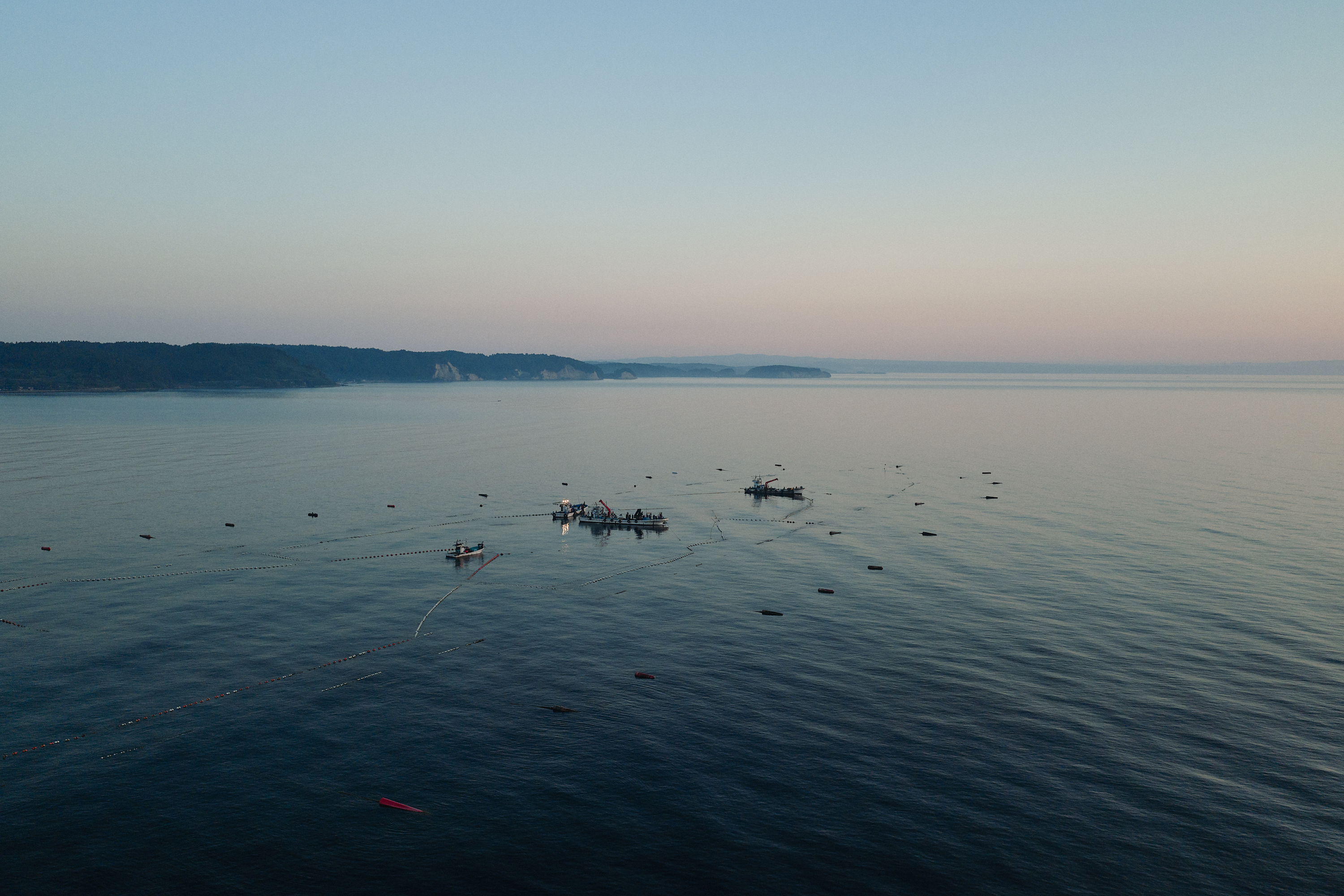
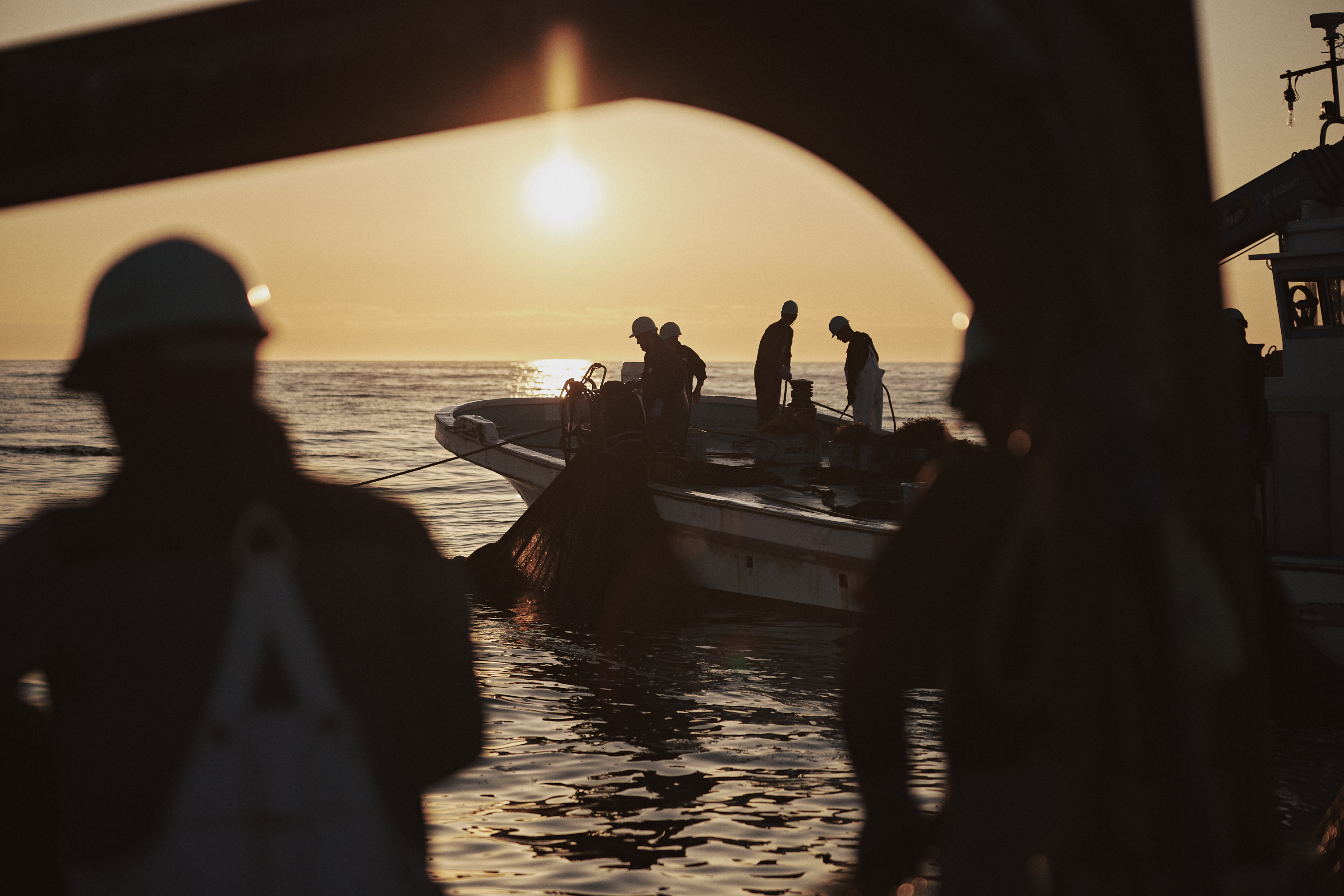
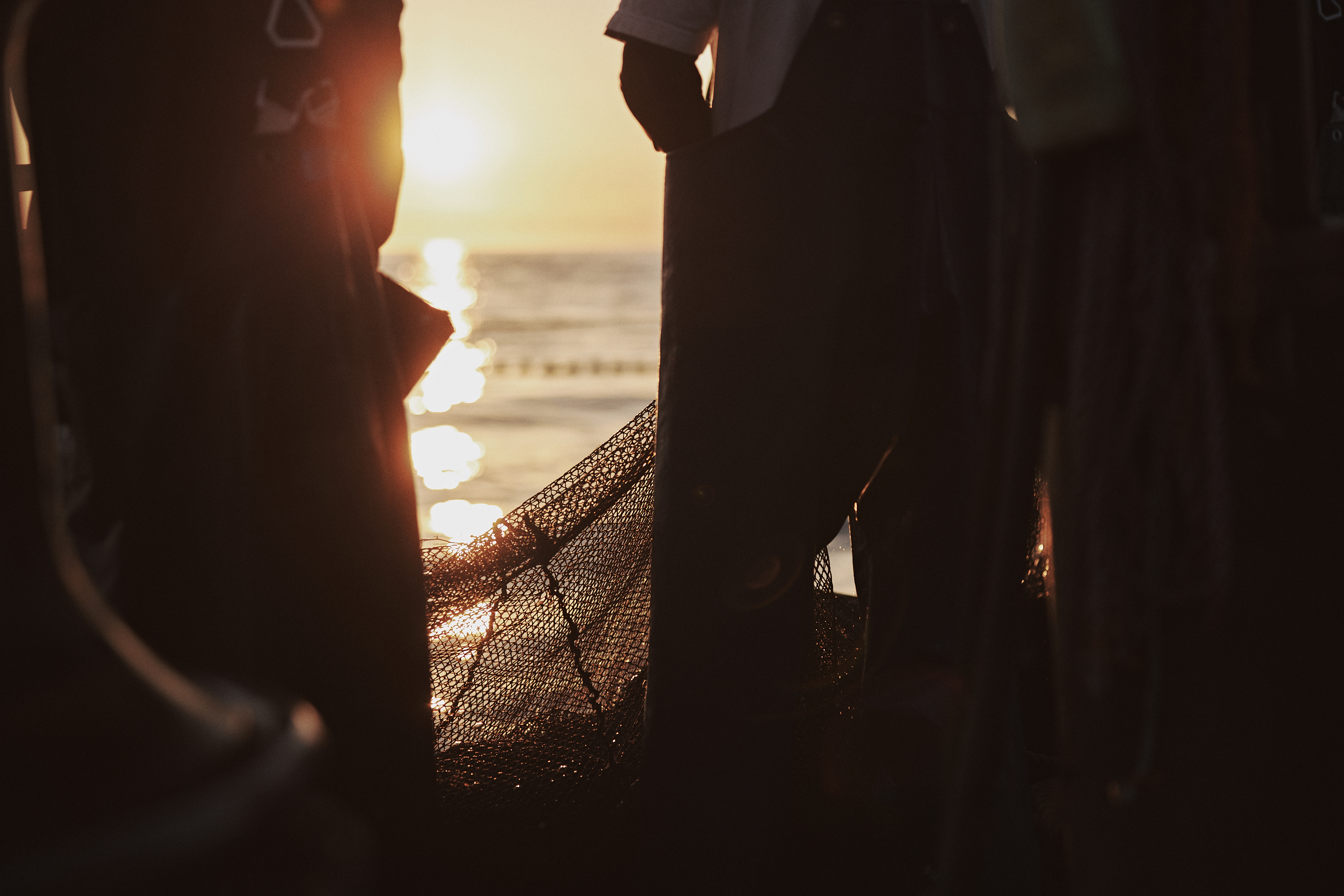
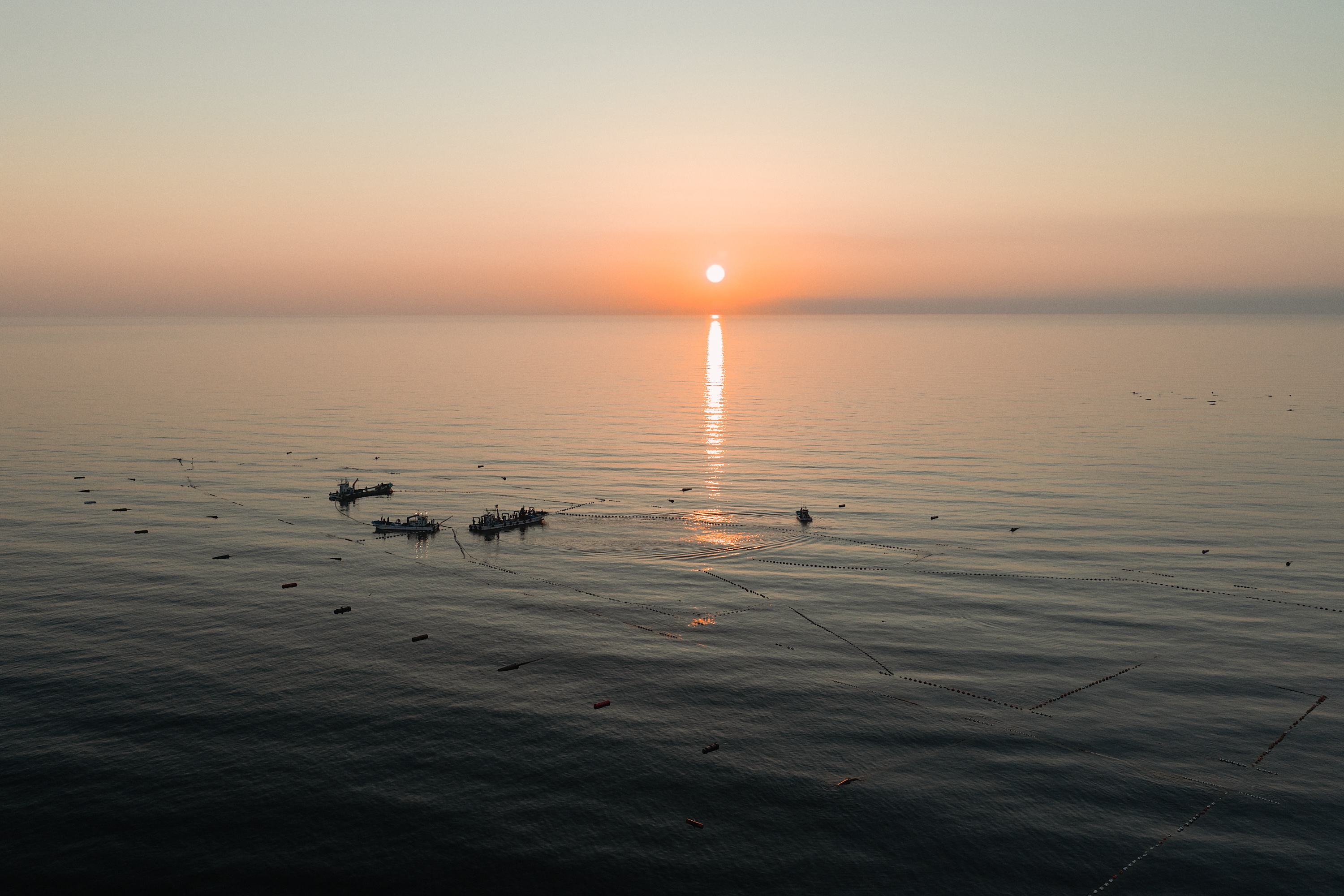
Long before a fish appears on a restaurant plate, a crew has met at the harbor and looked at the sea. In fixed-net fishing, a large net is set in a coastal fishing ground. Fish moving through the water enter its chambers; when conditions allow, the crew goes out to lift the collecting section and bring the catch ashore. A clear sky alone does not decide whether they can work. Wind, waves, and the speed of the current all matter.
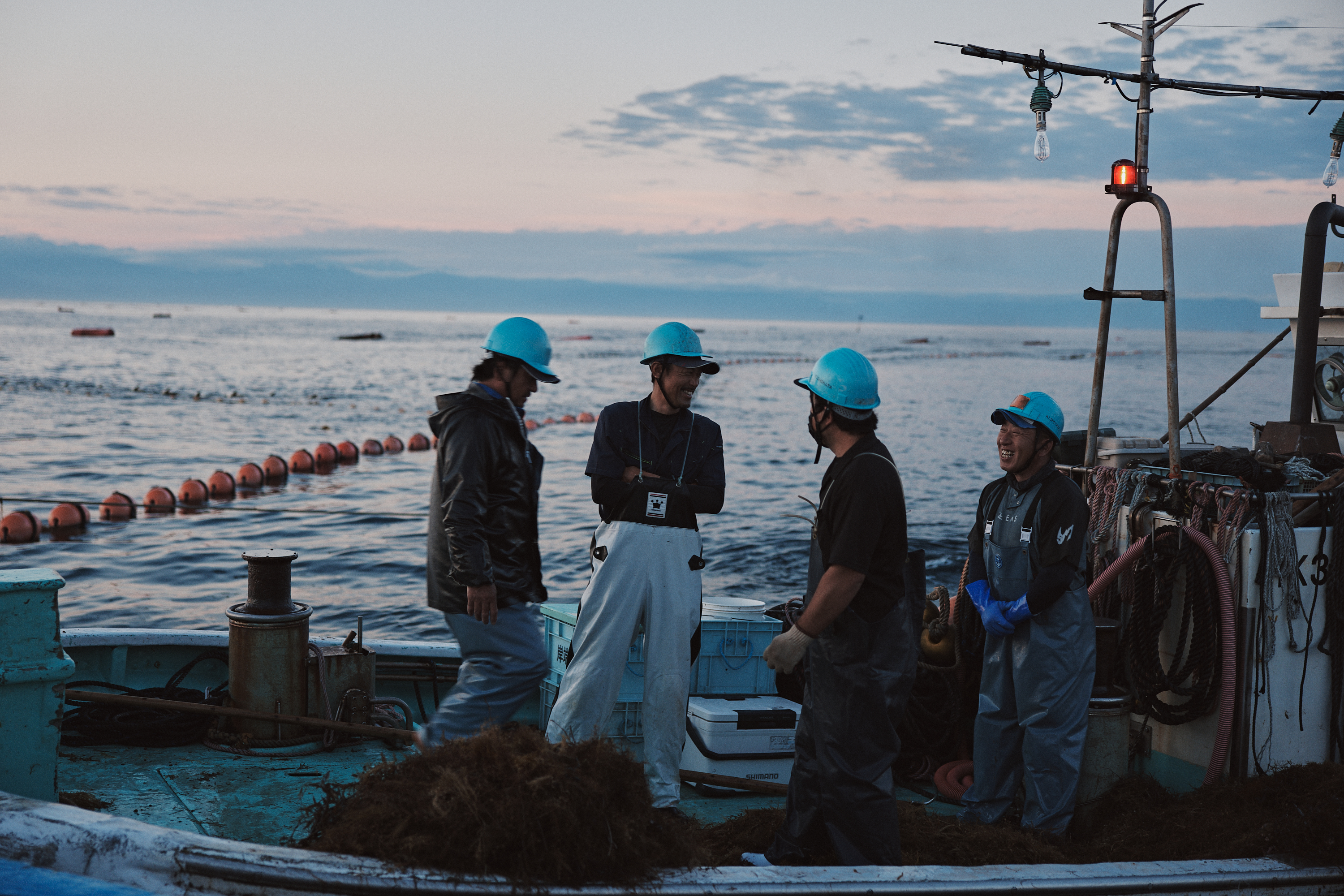
Fixed nets have been part of Noto’s inner coast for centuries. The deep water close to shore brings migratory fish within reach, including winter yellowtail. The catch changes with the season and the movement of the sea. Many people work together on the boats. After they return, a regular team on shore sorts fish for shipment. Their skill keeps the day’s work moving and helps the catch reach the market in good condition.
The network reaches farther than the harbor. Net makers, fuel suppliers, markets, fishmongers, restaurants, and families all depend in different ways on the fishery. The boats and the people sorting fish are a parts of one operation. The morning catch is an economic and social connection across the village.
The 2024 earthquake disrupted that network unevenly. The market in Nanao could not receive its usual shipments for a time. Fish still had to move quickly, and relying on fewer destinations made the work harder. The story of recovery is therefore about infrastructure and people as well as boats.
The sea presents longer-term questions. Releasing fish caught in a fixed net takes real effort, and the future also depends on younger people choosing the work. The fishermen wish for more people to know the fish of this coast, eat them, and understand the community that brought them ashore.